What is the Tech Fellowship?
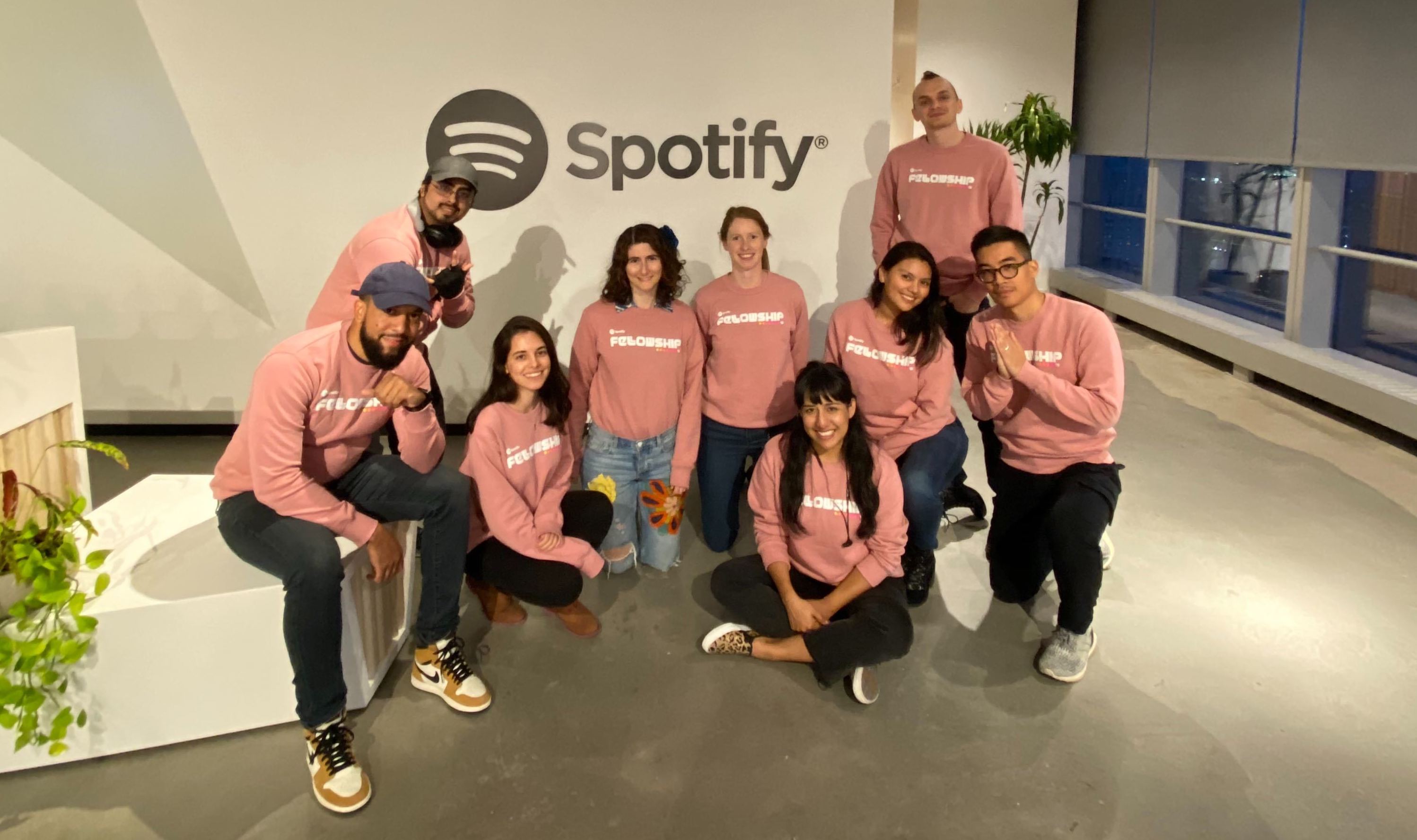
Spotify's Technology Fellowship Program is a development program aimed at hiring engineers just entering the professional tech environment from a diverse set of backgrounds. Participants in the Tech Fellowship program will operate as a team within Spotify for 18 weeks while receiving mentoring, personal & professional development from a broad set of employees to help them reach their full potential and learn what it’s like to work at Spotify.
Each year, the Tech Fellowship Program has focused on hiring candidates who are either self taught, attended a coding bootcamp, or have degrees from community colleges not usually reflected in our talent pipeline. To be admitted to the Technology Fellowship Program, you do not need to have any prior on the job technical experience, but you do have to have familiarity with programming. Our interview process is designed to assess for potential rather than experience, and look for candidates eager to learn as much as possible. Currently we offer the program in New York City and Europe.
EuropeAfter successfully running the Tech Fellowship Program in New York for around 4 years, we have expanded the program to London and Stockholm! In the fall of 2021, we worked with our Freemium Team to take on fellows for an exciting and accelerating program. We have partnered with various organisations to reach a diverse group of talents, and we have combined the STO and LDN programs into one Europe Program where participants can be based in either STO or LDN for the duration of the program.
By The Numbers
80%
participants hired full time6
years successfully running and looking forward to our 7th cycle in 2023100+
Spotifiers contributing as mentors, steering committee members, program managers or technical program leads3
Locations. We operate the program in NYC, Stockholm and LondonHow does the Tech Fellowship work?
Onboarding Phase (3 weeks)
We want participants to feel at home at Spotify so we spend the first 3 weeks doing structured curriculum to ensure they are up to speed on our tech stack, and understand the fundamentals of the tools and resources used at Spotify. Participants attend workshops on technical and non-technical topics including imposter syndrome, Agile methodologies, growth mindset, embracing failure, GitHub, and productivity tips.
Project Phase (8 weeks)
Participants form a squad and work together as a team on a specific project which is often a Spotify feature. This phase is meant to mirror the ways Spotify engineers work as a team to ship a project.
Embed Phase (6 weeks)
Participants are matched with a different Spotify team and embed directly into their feature work and projects. The goal of this phase is to evaluate the Associate Developers’ progress with the intent of converting them into a full time role on the team at the conclusion of this phase.
Full-Time Conversion
The program ends with a party, followed by 1 week paid vacation after which, all participants who meet the expectations for an Associate Engineer are offered full time positions on the team they embedded with.

What kind of support do participants receive?
Right from the beginning participants are paired with mentors from their assigned technical discipline to support them along the way. During the project phase their mentors stay with them to meet regularly for support, including the countless other engineers from the Spotify community. When it’s time to join a new team for the embed phase participants receive an onboarding buddy who helps them adjust to their new squad participating in all team meetings and rituals as any new engineer would.
Who is the Fellowship for?
Are you self taught or did you attend a bootcamp? Do you have a degree from a community college? Then this program is for you. We’re looking for aspiring engineers that have little to no technical job experience who are eager to learn as much as possible.
Not a fit?
See all of our internships and full time positions
Hear It From The Fellows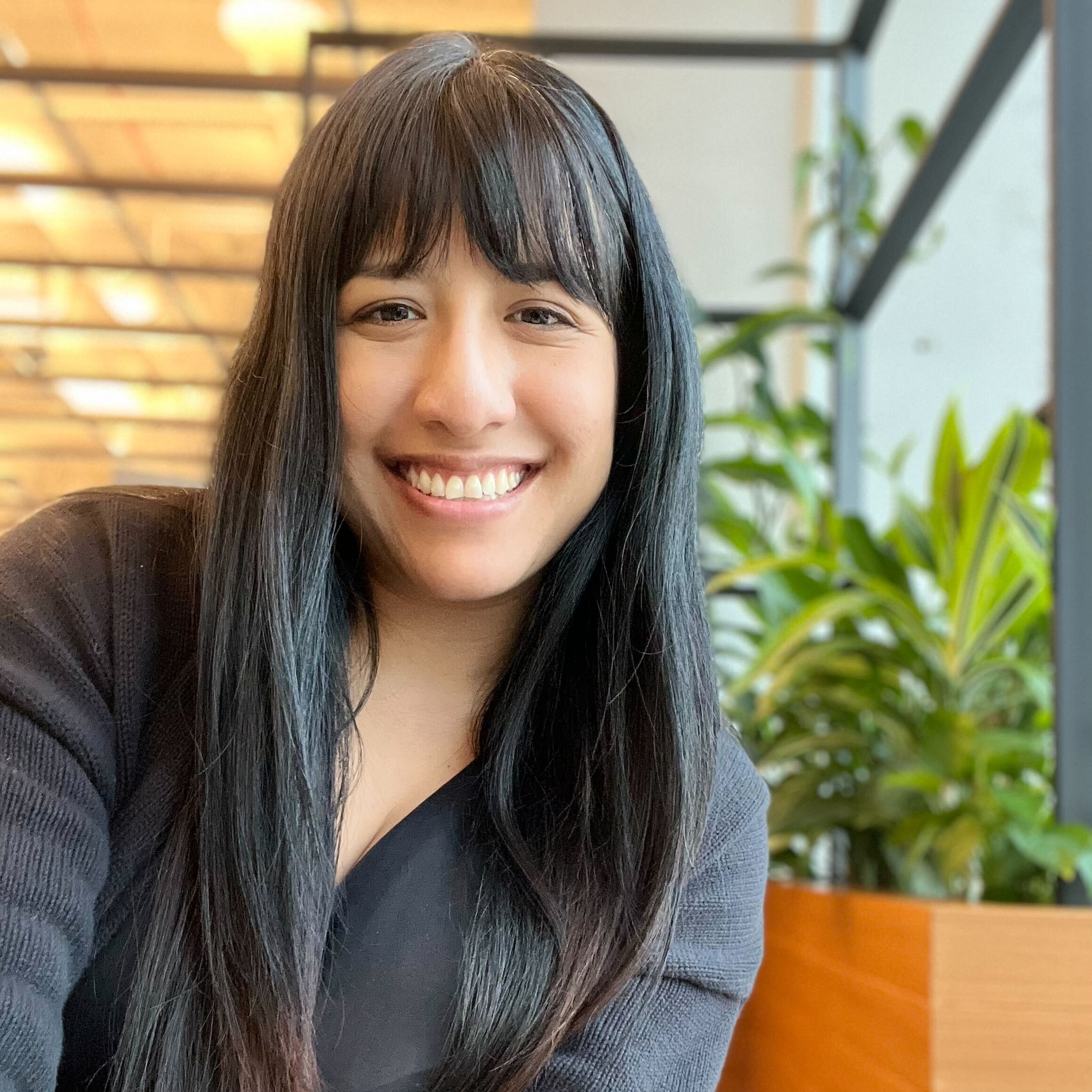
Erika
Joining the NYC Tech Fellowship 2019 Program at Spotify was truly an amazing experience. After an opportunity to learn full stack web development randomly showed up in my life, I just knew it was exactly what my life was missing. Before Spotify I was working at a local insurance agency for many years while also working as a server part time. What made the biggest impact to me, while being in the fellowship, was the amount of support we received throughout the program. I could feel that everyone involved genuinely cared for our success and growth. Spotify has a great culture for learning and growing, and that is what excites me the most about being here. Learning a new skill and making a career change while working full time and taking care of a baby and a toddler, was scary but it is so awesome to have a company like Spotify see the value in individuals like me and actually implement programs like this fellowship. As a woman, a mother, a Latina, and an immigrant this opportunity is really a dream come true! I find myself feeling so grateful and very excited, I look forward to the growth and new challenges my career in Spotify will bring.Fellowship Testimonials
Mentorship & Support
Mira '16"As part of the Fellowship, I was given the chance to prove myself as an engineer, and was supported and mentored by a variety of talented developers."
Passion
Luis '18"This experience only reinforced my love for programming and now I really can't imagine myself doing something different."
Career Growth
Mesfin '16"Since the Fellowship Program, I've taken the role of road manager to see a project to completion, mentored subsequent fellowship cohort participants and recently took on the role of Delivery Lead/Technical Owner for my squad."
Fail Safe
Rama '17"During the Fellowship Program I was encouraged not to give up easily and say I don't know how to do this because it is ok that we don't know everything. Rather, it would be a shame not to try and learn the unknown things and be scared to try new things outside our comfort zone."
 Hey, please introduce yourself?My name is Beatrice. I’m an Associate Engineer and I’ve been at Spotify for six months. I joined Spotify as a Tech Fellow in their London Tech Fellowship programme.What is the Spotify Tech Fellowship?The Spotify Tech Fellowship is an 18 week programme that is aimed at hiring engineers at the start of their tech career from a set of diverse and non-traditional technical backgrounds. During the 18 weeks, the Tech Fellows work as a team at Spotify whilst receiving mentorship, gaining continuous feedback and learning what it’s like to work at Spotify.After the 18 weeks, the Tech Fellows have the opportunity to be converted to a full time Associate Engineer and stay at Spotify after the Fellowship is completed. In 2021, Spotify started their first London Tech Fellowship programme after running their initial Tech Fellowship programme in NYC for 4 years. It was amazing to be part of the first London cohort!Tell us about your background in the tech industry?I have a non-traditional CS background. At university, I studied social sciences and then worked in finance for three years. My sister was taking a UX bootcamp course and she recommended that I learn how to code, as she knew I was good at problem-solving and I like “nerdy” stuff (I love anime and playing video games).I began learning how to code using FreeCodeCamp, Udemy courses and attending evening workshops hosted by Codebar. I mainly focused on learning Front End Development languages and frameworks such as HTML, Vanilla CSS and Vanilla JavaScript.I decided to leave my job to attend a coding bootcamp where I was introduced but not limited to React JS, C# and agile methodologies. After leaving my bootcamp, I got a role as a Frontend Intern at a Design/Technology Agency where I was later promoted to a Frontend Engineer. Now I’m here at Spotify.Why did you apply to Spotify and Spotify’s Tech Fellowship?I knew Spotify had excellent development opportunities. As a Spotify user, I was always amazed by all the innovative features. But honestly, I applied to the Spotify Tech Fellowship by chance. I was scared that I didn’t have enough experience. I live by the quote “Feel the fear, and do it anyway” and told myself “The worst thing they could say is, no.” I’m really glad I applied, as it’s been a fantastic experience.How was the onboarding process?Due to COVID-19 restrictions, I was onboarded remotely which is becoming the new norm within many tech companies. Recently, Spotify has introduced Work From Anywhere (WFA) so they will continue to remotely onboard employees.Before my start date, I was sent my work equipment which I set up on the first day. The first few weeks, known as the Onboarding Phase, I spent time taking internal learning courses. This included a course in my chosen skill set which taught me the fundamentals tools and resources used at Spotify.Then, I attended an internal bootcamp where new hire engineers worked collaboratively to create a product. Attending the bootcamp meant that I worked with engineers with different technical skill sets and seniority. The internal bootcamp pushed me out of my comfort zone, as I was the only junior developer on the team I was assigned and in charge of creating the frontend part of our product.During the onboarding process, I met with my mentor. Each fellow was assigned a mentor who supported them throughout the Tech Fellowship programme. I went to my mentor if I had issues setting up tools, needed some coding support or to discuss my career goals. My mentor was and still is extremely supportive by helping me expand my technical knowledge and demonstrating how to approach tasks that I’m unfamiliar with.Could you tell us more about your Tech Fellowship experience?After the onboarding phase is the Project Phase. During the project phase, I worked with the other Tech Fellows as a team on a project in the Spotify codebase for 9 weeks.The Tech Fellows were given two project briefs – one was a Frontend project and another was intentionally supposed to be a Full Stack Project. Due to time constraints, the Frontend Engineers were unable to contribute to the Full Stack Project, as result it became a Backend Project. As I had applied to be a Frontend Engineer, I worked on the Frontend project.The Frontend Project brief was to create an onboarding library which would be integrated into an existing system used by Spotify employees who create campaigns. We researched pre-existing onboarding experience created by other products such as Figma and Duolingo. In order to create the onboarding library, we built upon pre-existing Spotify UI components and used TypeScript and Storybook with React to create our own reusable UI components.Once we had created the reusable components, we published the onboarding library into an NPM package. This meant we could install the onboarding library into codebases and we could create an onboarding walkthrough. Creating an NPM package meant we could release new versions of the onboarding library, if new changes are made.At the end of the project phase, we demonstrated the product to our Engineering Manager, the other Fellows and Product Managers. The project phase was super fun and I learned so much. I gained a better understanding of agile methodologies, testing, terminal commands lines, git commands, Spotify’s tech stacks and how to work as a team at Spotify.After the project phase, the final phase was the Embedding Phase. During the embedding phase, I continued to learn the Spotify way of working but rather than working on an internal project, I was working on live Spotify systems and features that are used by other teams and Spotify users. I enjoy being challenged and jumped right into working with my squad. My first ticket was writing unit tests and I was well supported by my team!Throughout the embedding phase, I continued to push myself to independently complete tickets but had the opportunity to ask lots of questions. My team and everyone at Spotify are extremely supportive, so I never felt like my questions were stupid. In the Embedding Phase, I found out that I was going to be kept on permanently after the Tech Fellowship ended and I was staying with the team that I was embedding in. In addition, I decided to keep my mentor/mentee relationship, as I felt my mentor shared similar experiences and that they would be beneficial in helping me navigate my career. This was an amazing way to end the year.What are your day to day responsibilities as an Associate Software Engineer?My day to day varies, depending on what task I’m completing. As I specialise in Frontend Engineering, my work usually consists of creating UI components, frontend monitoring, pair programming with my squad members, learning my squad’s systems and networking across the company.How have you found working at Spotify?Working at Spotify has been a challenging and fantastic time. I feel like a broken record, but I have truly learned so much in a short period of time. Even when I’m working on a challenging task, I learn something new, whether it’s a new way to debug or deepening my knowledge of a concept.As mentioned previously, everyone is super supportive at Spotify which is something that I have felt since the Engineering Bootcamp. People are so knowledgeable and open to sharing their knowledge. It’s a great environment to work in!I love how I’m in charge of my own time. I’m not a fan of micro-management and feel more empowered when I know I’m in charge of my own schedule. This means I can plan my day according to my team meetings, work tasks and personal commitments. For example, starting earlier and finishing earlier in order to attend the gym before it becomes packed. Spotify advocates for their employees to have a good work/life balance. In fact, during the Tech Fellowship, all Spotify employees had a week off which was called Wellness Week.How does Spotify support your learning and development?There’s a lot of learning and development opportunities at Spotify. There is a learning and development portal called GreenHouse, where you can upskill/improve your chosen skills. There’s an internal learning and development team that provides courses to learn new technical skills, as Spotify encourages developers to be T-Shaped Developers. Additionally, there are internal Hack Weeks where Spotifiers form teams with new/or pre-existing team members to build projects.Also, I have a supportive manager and mentor who have helped me create achievable goals and provide excellent advice and encouragement! As someone who loves learning, I know my skills and knowledge will expand exponentially at Spotify.What are your future plans/goals?My short term goal is to be promoted to Engineer I. Long term goals are to help/mentor others from non-traditional technical backgrounds to get into tech and progress in my career. I’m trying my best not to pigeonhole myself in terms of roles and keep myself open to new opportunities in tech.Optional question: Last question, what is your favourite Spotify feature?I have two favourite features:The first one is the lyrics feature. I like to rap/sing in the mirror like Issa Rae from the show Insecure.The second feature is, the song radio feature, which is an auto generated song radio/playlist based on one song, is one of my favourite Spotify features. So if you're someone who listens to the same song on repeat, this is a great feature to discover new songs/artists that are in the same genre.Inspired by this post to join the band? View available vacancies at: https://www.lifeatspotify.com/
2023 NYC Technology Fellowship Program
Applications are closed
Applications are closed
2022 Tech Fellowship Program - Europe
Applications are closed
Applications are closed
Further Reading
Read more about the history and inspiration for the Fellowship, and get a behind the scenes look into how it all works.
FAQs
- Yes! This is a paying opportunity.
- 18 weeks
- Applications are now closed. Check back here for more information on future applications in the next few months
- Self taught, bootcamp and community college grads. We’re looking for aspiring engineers that have little to no technical job experience who are eager to learn as much as possible.
- We're finalizing details for 2023 programs. More information to come!
- Unfortunately participants must be available for all dates the program runs.
- Currently neither of our programs provides relocation assistance.
- To be eligible for the LDN, STO or NYC Fellowship Programs, we require participants to have the proper work authorization to work in either London (UK), Stockholm, or New York City.